World Cup 2026 Bracket: The Full Knockout Path to MetLife
From the brand-new Round of 32 to the July 19 final, here is the complete 2026 World Cup knockout bracket — every round, every date, and why Spain and Argentina can only meet in the final.
The 2026 World Cup blows up the format you grew up with. 48 teams, 12 groups, and a brand-new Round of 32 — the first time in history the tournament adds an extra knockout round. That means more survive the group stage, more elimination games, and a longer, meaner road to the trophy. This is the complete knockout bracket, explained end to end, with every key date and the one structural quirk that shapes the whole thing: the draw is split into two halves, so the two top seeds — Spain in Group H and Argentina in Group J — cannot meet until the final.
How 32 teams reach the knockout stage
The maths is the first thing to grasp. Twelve groups of four play a round-robin. The top two in every group go through automatically — that's 24 teams. Then the eight best third-placed teams across the 12 groups are added, ranked by points, goal difference and goals scored. Add it up: 24 + 8 = 32 teams into the knockout phase. Only the four worst third-placed sides and the bottom team in each group go home after the group stage.
That best-third system is why your team is never truly dead until the last whistle of matchday three — and why the Round of 32 pairings stayed partly blank until the group stage finished, since each group winner is matched against a third-placed team from a pool of possible groups. Track the live picture on our groups and matches pages.
Round of 32 — June 28 to July 3
The new round runs across 16 matches from June 28 to July 3, scattered from SoFi Stadium in Los Angeles to the Estadio Azteca in Mexico City and MetLife in New Jersey. Group winners get the softest landing — a third-placed qualifier — while runners-up are paired against each other or against other group winners.
Two anchor ties tell you everything about the seeding logic. Winner Group H (likely Spain) faces Runner-up Group J, and Winner Group J (likely Argentina) faces Runner-up Group H — mirror images that keep the co-favourites on opposite tracks from the very first knockout game. For a deeper walkthrough of how the 32 slots fill in, read our Round of 32 explainer.
Round of 16 — July 4 to 7
Win in the Round of 32 and you reach the Round of 16, played July 4–7 across eight venues including Houston, Philadelphia, Seattle, Atlanta, Arlington, Vancouver, Mexico City and MetLife. From here the bracket behaves like the World Cup you know: pure single-elimination, 16 down to eight.
The two halves of the draw
This is the part casual fans miss. The 32-team bracket is split into a top half and a bottom half, each funnelling into one semi-final. FIFA's seeding deliberately drew the No. 1 and No. 2 ranked teams into opposite halves, and did the same with No. 3 and No. 4.
Follow the maths. Spain (Group H winner) runs through Round-of-16 Match 93, quarter-final 98 and into Semi-final 101. Argentina (Group J winner) runs through Round-of-16 Match 95, quarter-final 100 and into Semi-final 102. Different semi-finals — so if both win their groups, they can only meet in the final at MetLife. The same split keeps France (Group I) on Spain's side and England (Group L) on Argentina's side, meaning all four of the model's top European/South-American powers are kept apart until at least the semis. Our predictions hub tracks how likely each of those paths actually is.
Quarter-finals — July 9 to 11
Eight teams, four matches, July 9–11, at venues including Gillette Stadium (Boston), SoFi Stadium (Los Angeles), Hard Rock Stadium (Miami) and Arrowhead Stadium (Kansas City). Quarter-finals 97 and 98 feed the top-half semi; 99 and 100 feed the bottom-half semi.
Semi-finals — July 14 and 15
Semi-final 101 is July 14 at AT&T Stadium in Arlington, Texas; Semi-final 102 is July 15 at Mercedes-Benz Stadium in Atlanta. This is the stage where the two halves finally cross-reference: Spain's path and France's path collide in one semi, Argentina's and England's in the other. On paper, a Spain–France semi and an Argentina–England semi is the seeding's "chalk" outcome — and our model would happily back the two co-favourites to be there.

Third-place play-off and the final
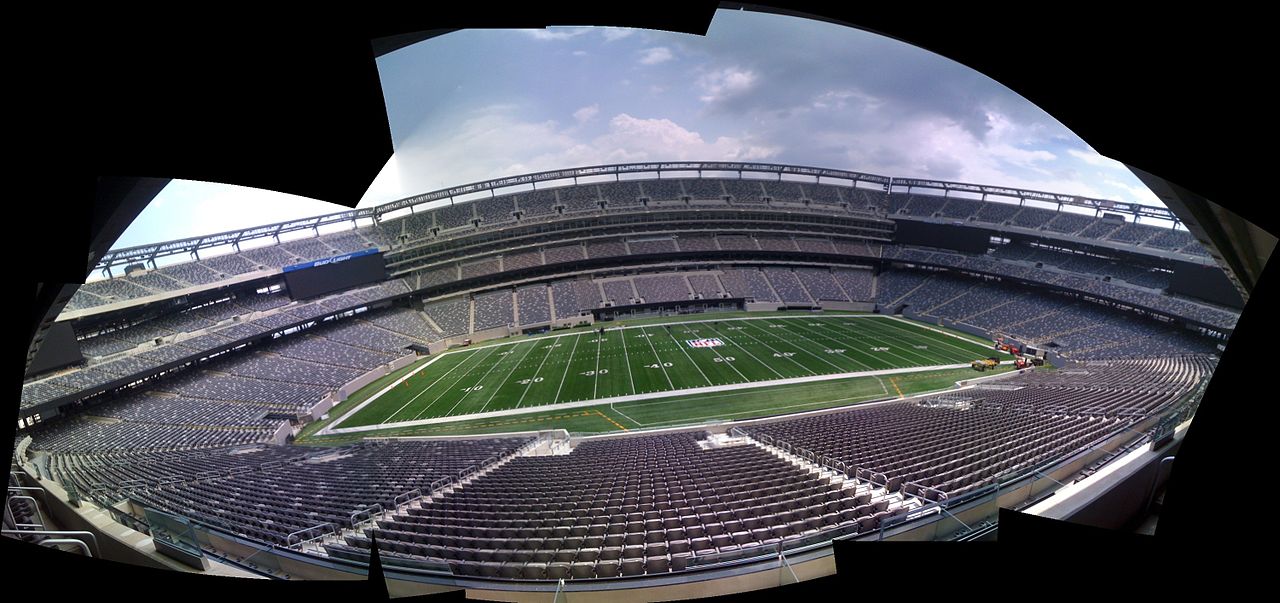
The two beaten semi-finalists contest the third-place play-off on July 18 at Hard Rock Stadium in Miami. Then it all comes down to Sunday, July 19, at MetLife Stadium in East Rutherford, New Jersey — the 104th and final match of the tournament, kicking off at 3:00 p.m. ET.
Who does our model favour?
Spain and Argentina are the clear co-favourites, with France a step behind in third and Brazil a notch below that, then England. Because Spain and Argentina sit in opposite halves, the cleanest bracket story is a rematch of football's two best teams for the trophy — but watch the dark horses: Morocco, Colombia, Croatia and Japan all have the quality to wreck a half of the draw.
Can I simulate the whole bracket myself?
Yes — that's exactly what our simulator is for. Pick your group winners, runners-up and best thirds, and watch the entire knockout tree fill itself out to the MetLife final. Pair it with our 2026 predictions to see where your bracket agrees with the model — and where you're calling a brave upset.
Related stories