World Cup 2026 Round of 32 Explained: How 32 Teams Advance
The 2026 World Cup debuts a brand-new Round of 32. Here is exactly who qualifies, when it starts, and how the bracket flows to the final at MetLife.
For the first time in its history, the FIFA World Cup will open its knockout phase with a Round of 32. It is the single biggest structural change of the 2026 tournament co-hosted by the United States, Mexico and Canada, and if you still picture the old Round of 16 as the first knockout step, this guide is for you.
The reason is simple arithmetic. With the field expanded from 32 to 48 teams, the group stage is now made up of 12 groups of four. Twelve groups cannot feed neatly into a 16-team bracket, so FIFA added an extra round: 32 teams survive the groups, and they meet in a knockout round that has never existed at a World Cup before.
Who qualifies for the Round of 32
Thirty-two of the 48 teams advance, and they come from three buckets:
- All 12 group winners — the team that finishes first in each group.
- All 12 runners-up — every second-placed team.
- The 8 best third-placed teams — the new wrinkle.
That last group is where 2026 differs most from any World Cup you have watched. Twelve groups produce twelve third-placed teams, but only eight of them go through. FIFA collects all twelve into a single ranking table and keeps the top eight; the bottom four go home.
Within each group, standings are settled by points, then head-to-head record, then goal difference and goals scored. But the best-third-place table cannot use head-to-head, because those teams never played each other. Instead FIFA ranks them by points, then goal difference, then goals scored, then disciplinary (fair-play) record, then FIFA World Ranking, with a drawing of lots as the final tie-breaker. In practice, four points (typically a win and a draw) almost always books a third-placed side's ticket, and even three points can be enough depending on how the other groups finish.
You can watch all of this unfold live on our groups page and follow every result on the matches hub.
How the bracket flows into the Round of 16
The knockout stage is a clean single-elimination bracket from here. The 16 Round of 32 ties were mapped out so that group winners are rewarded with seeded paths, while the eight qualifying third-placed teams are slotted into pre-defined bracket positions depending on which groups they came from — FIFA's schedule covers all 495 possible combinations of qualifying thirds. The very first knockout match pits the runner-up of Group A against the runner-up of Group B.
The winners of the 16 Round of 32 ties advance directly to the Round of 16, then four quarterfinals, two semifinals, and the final. Nothing loops back; every match is win-or-go-home.
The key dates
The group stage runs from the opening match on June 11 (Mexico kick off in Mexico City) through June 27. The knockout rounds then follow in quick succession:
- Round of 32: June 28 – July 3 (16 matches)
- Round of 16: July 4 – 7
- Quarterfinals: July 9 – 11
- Semifinals: July 14 – 15
- Third-place match: July 18
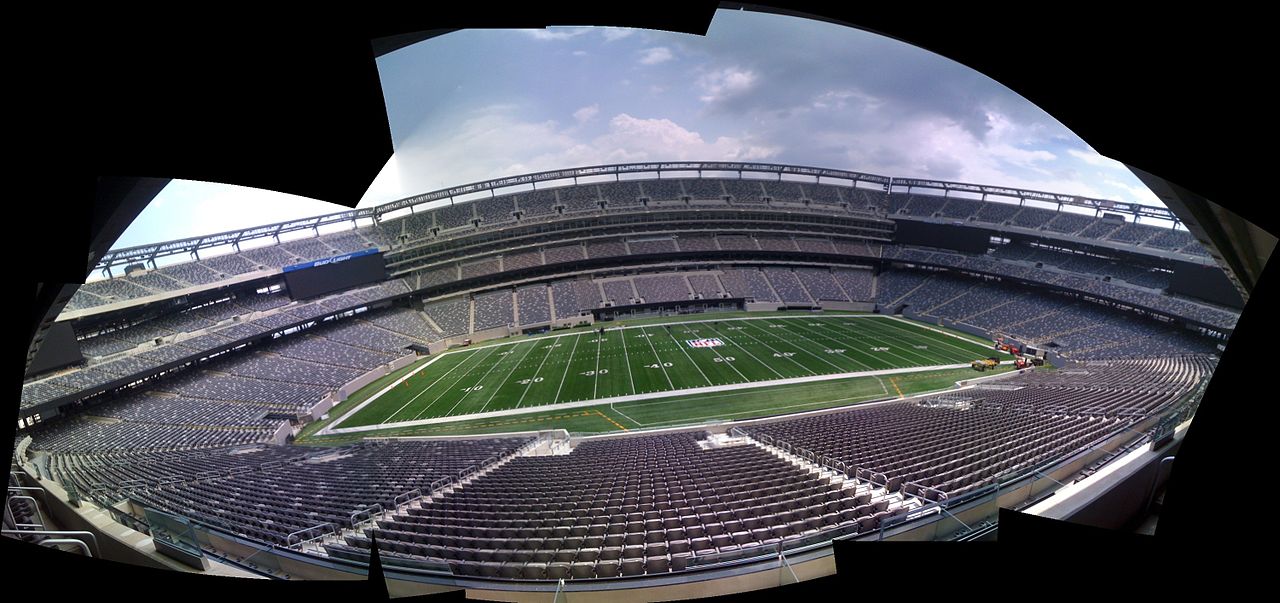
- Final: July 19, at MetLife Stadium in East Rutherford, New Jersey
All told, the tournament balloons from 64 matches to 104, and a team that reaches the final now plays eight games instead of seven.
Why it is genuinely new
Under the old 32-team format, only 16 teams advanced — eight group winners and eight runners-up — straight into the Round of 16. Finishing third meant elimination, full stop. The 2026 model keeps the door open for the eight best third-placed teams and adds a whole extra knockout round, which is why a strong group draw matters less than it used to: survive, sneak through, and you are one good night away from the last 16.
The groups were set at the final draw on December 5, 2025 in Washington, D.C., where Spain landed in Group H and Argentina in Group J — drawn into opposite halves so the two co-favourites cannot meet before the final.

For the full breakdown of the new structure, read our 48-team format explainer. And to see who our model expects to navigate this longer road — Spain and Argentina are the clear co-favourites, with France, Brazil and England close behind, and dark horses like Morocco and Colombia lurking — check our World Cup 2026 predictions and build your own path through the new bracket in the simulator.
Related stories